Commentary: Polyoxyethylene Lauryl Ether—A Familiar Chemical, Big Responsibilities
Historical Development
Polyoxyethylene lauryl ether, known by many as laureth or ethoxylated lauryl alcohol, didn’t show up overnight. Back in the mid-1900s, chemists were hunting for ways to blend oil and water—an age-old headache in everything from soaps to medicines. Surfactants started taking center stage, and this synthetic chemical became a staple. These first commercial blends came out of postwar innovation, riding the boom of synthetic chemistry. Decades later, laureth-type compounds now turn up in just about every mass-produced cleaner or personal care product. Watching this, it's clear how that postwar spark built the modern cleaning and pharmaceutical industries and shaped what sits on shelves today.
Product Overview
Walk down any store aisle and you’re looking at formulas rich in polyoxyethylene lauryl ether, whether it’s shampoo, dish soap, or a gentle skin cleanser. Breaking surface tension lets liquids really mix, so dirt or oil lifts away. This utility means the chemical finds its way into products for home, industry, and even medicine. On the industrial side, its low-foaming, moisture-sustaining qualities make manufacturing smoother and safer; in medicine, formulations count on it to deliver active ingredients into solution, especially for folks with sensitive skin. Having handled these products myself, the difference becomes easy to spot: scents last longer, creams feel smoother, and cleaning power climbs.
Physical & Chemical Properties
Look at polyoxyethylene lauryl ether and you'll notice a pale, almost watery liquid or soft paste, depending on how much ethylene oxide teams up with lauryl alcohol. These numbers, usually marked as Laureth-x, give each formula its “feel.” Put it in water and it dissolves without a fight, out-competing many natural soaps. It doesn’t break down easily but handles temperature swings and pH changes with ease—in other words, pretty resilient stuff. With that, it doesn’t just survive in all sorts of conditions; it holds steady, keeping products performing well from hot showers to factory lines.
Technical Specifications & Labeling
Every barrel, drum, or bottle carries a label marked with its specific number of ethoxy units and degree of purity—both make a big difference in performance. Labels in Europe, Asia, and North America highlight things like HLB (hydrophilic-lipophilic balance), moisture content, and viscosity. Suppliers also need to make traceability clear so that recalls or quality checks happen fast. Regulatory guidance demands clear, honest reporting, especially where kids or skin contact are involved. Industry veterans know to double-check safety sheets, because small stovetop or lab errors can lead to big batch inconsistencies or safety concerns. If only more companies kept their labels simple and thorough, accidental misuse would drop fast.
Preparation Method
The manufacturing starts with lauryl alcohol, a fatty alcohol pulled from coconut or palm oil, and ethylene oxide—a gas under pressure and temperature. By feeding ethylene oxide in a controlled way, you “build” the number of oxyethylene units, tuning the product for just the right job. If the reaction gets too hot, you’ll lose product and raise safety hazards, so temperature control and monitoring trump fast output. I've watched this type of process in plant settings, where reactor rooms hum quietly because a misstep with ethylene oxide spells disaster. Proper containment, real-time analytics, and trained personnel all keep things running without injury or environmental fallout.
Chemical Reactions & Modifications
Polyoxyethylene lauryl ether won’t just sit in a product; it keeps open the door for further chemical tweaking. Add in sulfation and you get laureth sulfate, which pops up in so many shampoos for its lathering. Makers might anchor the molecule to other surfactant “cousins,” altering rinse-off feel or stability. Chemists dive deep into figuring out how additives or heat change its performance: some tweak its molecule to lower irritation or to help blend with thick oils and gels. Over the years, chemists sharpened methods to cut down on unwanted byproducts, making the whole chain a bit safer for everyone in the loop.
Synonyms & Product Names
Not every bottle calls it the same thing. You’ll spot polyoxyethylene lauryl ether, laureth-x (where “x” counts the ethylene oxide units), PEG lauryl ether, or names like Brij. These aliases confuse shoppers and sometimes even formulators. Manufacturers favour proprietary names for brand power or to mask ingredient lists. Strict naming guidance from regulatory authorities could clear up a lot of this uncertainty if enforced with the same energy as pharmaceutical labeling.
Safety & Operational Standards
Making and handling polyoxyethylene lauryl ether has never been risk-free. Ethylene oxide, its essential ingredient, rates as carcinogenic—plants must run under airtight controls, venting and scrubbing gases, and workers wear full protection. Spills mean real hazards to skin and eyes, so quick cleanup protocols should stay sharp and tested. Finished products generally cause little irritation but can dry out sensitive or compromised skin. Having spent time with chemists who handle this stuff, every one of them stresses the same thing: never let routine turn complacent, especially when loading or transferring material near open processing lines. Industry-wide, regular training and stricter incident reporting could lower accidents even more.
Application Area
It would be tough to walk through a modern home and not find a product using polyoxyethylene lauryl ether. Detergents, dishwashing liquids, face washes, even some pharmaceuticals lean on it for consistency and low-irritation performance. In textiles, it aids dyeing, cutting down on uneven colour streaks. In medicine, liquids become easy to swallow or inject, thanks to this molecule’s solubilizing action. Food processing machinery also needs regular deep cleaning, and that’s another area where it shows up. Direct food contact rarely gets approval because of potential trace impurities, so regulations keep an eye on product boundaries. The broad adoption seen today comes from decades of trial, error, and ever-tightening safety laws.
Research & Development
Ongoing research aims to tackle two persistent limits: safety and sustainability. Work on bio-based ethylene sources could reduce reliance on fossil fuels and cut plant emissions. Scientists also study how long-chain ethers behave in aquatic environments, as some persist and build up over time. Lowering skin reactivity and reducing contamination by nitrosamines or 1,4-dioxane top the research wish list. Industry partnerships with universities keep progress moving, with much of the R&D focusing on greener sourcing and real-world toxicity responses. Years in labs taught me how even small tweaks in chemical structure change everything, from performance to consumer complaints—there's never a shortcut for long-term safety.
Toxicity Research
On its own, polyoxyethylene lauryl ether rarely enters the body in large enough quantities to cause acute harm outside chemical plants, but low-level, long-term exposure remains a concern. Studies track how it interacts with eyes, skin, and whole ecosystems—throw away a bottle of shampoo and trace amounts linger in water supplies, where fish and microbes don't break it down fast. Some human skin types show allergic reactions after heavy or repeated contact. Regulators limit how much of certain byproducts can be present, especially 1,4-dioxane, a contaminant known for cancer links. Improving manufacturing purity and testing water run-off at wastewater plants could reduce this impact. Users at home can help by supporting brands that publish safety and purity audits, keeping pressure on companies to stay honest.
Future Prospects
People want products that clean just as well as always but with less pollution, fewer risks, and minimal long-term damage. The next big leap comes from new synthesis techniques that swap out fossil-raw materials for plant-based options, along with better recycling or neutralization at treatment plants. Regulations are already tightening, forcing transparency on ingredient sourcing, batch purity, and long-term safety. As buyers look for gentler, “greener” products, demand drives innovation: expect to see safer, lower-impact compounds rolling out to replace some current recipes. Seeing how the industry adapts, modern chemistry isn’t about just making things work; it’s about making them responsibly.
A Common Ingredient with a Big Job
Polyoxyethylene lauryl ether turns up more than most people suspect. Sitting on a bathroom shelf, a bottle’s label probably lists it, though maybe by another name, like laureth or PEG lauryl ether. This substance helps soaps, shampoos, and cleaners do their work. Most folks notice a difference when it's missing: washing up doesn't quite feel the same, and dirt clings harder.
The Backbone of Modern Cleaning
Manufacturers put polyoxyethylene lauryl ether in formulas for one main job—breaking up oily grime. It acts as a surfactant, which means it lowers the surface tension of water. Anyone who’s scrambled eggs and tried washing the pan knows water alone won’t cut that grease. This is where surfactants like polyoxyethylene lauryl ether step in, letting oil and water mix. The oil lifts, and rinsing does the rest. Dish soaps, laundry detergents, bubble baths—most owe their effectiveness to this chemistry.
Beyond Just Soap and Suds
Personal care relies on this compound too. In shampoos, its gentle action makes lather rich and creamy, without harshness that strips the scalp. I’ve got sensitive skin, so I notice the difference. Harsh detergents leave my skin tight, almost itchy. Shampoos and body washes using polyoxyethylene lauryl ether clean gently, rinsing easily without over-drying.
Cosmetics also need it as an emulsifier. In creams and lotions, oil and water like to part ways, but emulsifiers keep them together. Without help from compounds like polyoxyethylene lauryl ether, many ointments would separate, making every use a science experiment.
Concerns around Safety and Environment
It pays to take a closer look at what goes down the drain. Studies and reviews by organizations like the Cosmetic Ingredient Review have given polyoxyethylene lauryl ether a green light for skin-contact products, within proper concentration limits. Still, folks with allergies or eczema should scan their labels—no two skins respond the same. The industry also faces pressure to keep ingredients environmentally friendly. Polyoxyethylene lauryl ether breaks down over time, but not always as fast as society might like. Some worry about traces in rivers. Leading brands now track their sourcing and experiment with greener versions or biodegradable alternatives.
Towards Safer, Cleaner Solutions
Transparency matters. Everyone should know what they’re using, and companies own the responsibility for clear labeling. Better communication builds trust—consumers can check labels for polyethylene glycols or laureth and decide what suits their needs. Producers experiment with plant-based surfactants and safer chemistries. As the market shifts, it listens to the push for greener solutions. Sometimes the old ways still have a place, if handled responsibly.
Polyoxyethylene lauryl ether doesn’t get headlines, but it shapes daily routines in bathrooms and kitchens everywhere. Most of us benefit from a little science in the soap dish, and a bit of awareness goes a long way towards safer, smarter choices.
Understanding Polyoxyethylene Lauryl Ether in Personal Care
Reading through the ingredient list on shampoo bottles or facial cleansers, Polyoxyethylene Lauryl Ether often pops up. With a name like that, anyone might wonder: is this safe to use every day? This ingredient acts as a surfactant, helping water mix with oil and dirt, making it easier to rinse grime away. It’s found in plenty of products because it creates the creamy lather people expect when washing skin or hair.
Looking at Safety and Skin Friendliness
Most science points to Polyoxyethylene Lauryl Ether being low-risk for healthy adults, as long as companies stick to reasonable levels. Studies reviewed by the CIR Expert Panel, an independent group of scientists, have given it the green light for rinse-off products like shampoo and cleansers. They check for things like skin irritation or allergic reactions. Over the years, reports of problems tend to be rare and mild—usually some redness if someone has very sensitive skin or uses a product with lots of other strong ingredients.
From personal experience and what I hear in the dermatologist’s office, irritation happens most often when people over-cleanse or try to scrub away every last trace of oil. Many folks mistakenly choose the most stripping products, expecting squeaky clean means healthier skin. That can actually dry skin out or make the scalp produce more oil, creating a frustrating cycle.
Who Needs to Watch Out?
Sensitive skin types and those with eczema or allergies might react to surfactants more strongly. Children’s skin is thinner, so pediatricians often suggest parents go for fragrance-free and very gentle products. Looking for washes and shampoos sold as “for sensitive skin” can cut the risk, since these typically use milder surfactants or lower concentrations.
Every company should test how their formulas work in the real world. They’ve got a responsibility to avoid adding other harsh additives that can ramp up irritation, like strong fragrances or certain preservatives. Sometimes, two mild ingredients combine and suddenly they feel much harsher than expected.
Bioaccumulation and Environmental Questions
Some consumers care about safety beyond the bathroom sink. Reports say Polyoxyethylene Lauryl Ether breaks down more easily in water than some other similar chemicals, which means less build-up in lakes or streams. Still, keeping an eye on the whole life-cycle of cosmetic chemicals protects everyone’s health and the environment over the long run. Brands with nothing to hide will share details about how their ingredients are sourced and tested.
Better Choices and Smarter Habits
For anyone who’s ever felt itchy or dry after washing, swapping to a cleanser with fewer ingredients can work wonders. Always spot-test a new product on your arm before using it everywhere. If redness or flaking sticks around, it helps to bring the bottle to a dermatologist and check for possible triggers. Product labels aren’t always clear, so double-check names—Polyoxyethylene Lauryl Ether can turn up as Laureth-2, Laureth-3, or similar.
Knowledge really cuts through the confusion. Major health authorities track ingredient safety based on actual studies, not just online rumors. Worry less about the long, unfamiliar name and focus on how your own skin feels. When in doubt, less can be more. Make sure to ask professionals if something feels off. A little skepticism keeps everyone safer—and can lead to softer, healthier skin and hair.
Understanding Polyoxyethylene Lauryl Ether
Polyoxyethylene Lauryl Ether, often spotted on ingredient lists as Laureth-xx (where “xx” marks the number of ethylene oxide units), bridges the worlds of chemistry and daily life. The structure starts with lauryl alcohol—a chain of twelve carbons drawn from coconut or palm oil. Chemists then attach a handful of oxyethylene units through a reaction with ethylene oxide. The result forms a molecule with a slick, oil-friendly tail (the lauryl side) joined to a water-loving string (polyoxyethylene), creating a classic non-ionic surfactant.
The Shape That Makes It Work
At its core, the structure runs long and flexible. The lauryl end stands out for its greasy, oil-attracting character, while the polyoxyethylene blocks bring a soft, hydrophilic touch that grabs onto water. This blend lets the molecule slip between oil and water—it breaks the tension and lets dish soap, lotions, and shampoos bubble, foam, and rinse the way we expect.
Picture a string of pearls. The “pearls” are the ethylene oxide groups attached head-to-tail, linked up to one end of the lauryl chain. In practice, chemists pick how many pearls to add. A shorter string makes for stronger cleaning—suitable for industrial tasks, but sometimes harsh on skin. A longer string draws in more water, aiming for gentle cleansing and smooth texture in personal care formulas. The balance between oil-soluble and water-soluble parts affects everything from foaming power to rinsing speed.
Why Should Anyone Care?
I’ve spent years reading ingredient lists, both as a parent worried about irritants and as a science writer called to make sense of them. Polyoxyethylene Lauryl Ether shows up almost everywhere: shampoos, body washes, kitchen cleaners, even in textile factories. It earns this spot through a structure that walks the tightrope between cleaning strength and skin softness.
Its track record in household and personal products owes a lot to that well-balanced chemical design. Studies report low skin irritation when you match the number of ethylene oxide units to the job—a lesson learned by many with sensitive skin, including my own family. In textile and industrial use, this surfactant lets dyes spread smoothly, showing that small changes in chemistry ripple across entire industries.
Concerns and Better Paths Forward
Despite its practical strengths, Polyoxyethylene Lauryl Ether stirs up honest debate. Building the polyoxyethylene chain calls for ethylene oxide, a compound flagged for toxicity and linked to environmental risks in production. While residues in finished products tend to fall below risk thresholds, manufacturing footprints leave questions hanging for green-minded shoppers and producers alike.
Some brands turn to plant-based surfactants or tweak formulas to use the fewest possible chemical steps. For consumers, savvy choices mean reading labels with a critical eye and supporting companies who publish sourcing and production info. In research circles, green chemistry teams keep experimenting with safer processes—replacing petroleum-based ethylene oxide with biobased versions, or designing enzymes that piece together the same structure at lower energy and water costs.
Final Thoughts: Chemistry with Impact
Polyoxyethylene Lauryl Ether draws its power from a deceptively simple chain-and-string structure. The way it joins grease-fighting to water-mixing underpins nearly every wash and rinse at home, but reminds us that chemical convenience comes with trade-offs. Science does not pause; the search for safer surfactants shows that better design—and deeper transparency—can bring smarter, safer chemistry to everyone’s daily routine.
What’s Hiding in Your Shampoo Bottle
Flip over any shampoo or bubble bath and you might spot polyoxyethylene lauryl ether on the label. This chemical works hard behind the scenes as a surfactant, helping oil and water mix, making bubbles, and lifting dirt from skin and hair. It shows up in household cleaners and industrial products, too. After years of washing my own hands with products containing this ingredient, my skin sometimes stings and turns red. At first I thought it was the weather or maybe stress. But reading what dermatologists say about surfactants, I realized these symptoms aren’t rare. Some folks’ immune systems light up as soon as this chemical touches their skin.
Allergic Reactions: More Common Than You Might Think
According to the American Contact Dermatitis Society, surfactants like polyoxyethylene lauryl ether can cause allergic contact dermatitis. This shows up as itching, redness, and swelling, especially in people who already have sensitive skin or conditions like eczema. It's surprising how a little daily shower foam can mess with the skin’s barrier. Studies from scientific journals and reports from poison control centers highlight increasing calls about rashes linked to household chemicals. Children end up at greater risk — their skin is thinner and absorbs chemicals faster. Stories pile up in online forums about kids breaking out in hives after trying a new bubble bath or body wash.
Trustworthy Sources Back Up the Concerns
The National Institutes of Health and the European Chemicals Agency have both reported allergic reactions tied to polyoxyethylene lauryl ether. Skin-patch tests confirm the connection: a patch with this ingredient causes redness for some people within days. In my own family, after swapping to fragrance-free soap with gentler ingredients, our rashes faded. That’s not a medical trial. Yet, I can see how industry moves matter at home.
Why This Matters—And What Steps Make a Difference
Personal care products fill store shelves. People deserve to know what’s in them and how those ingredients might trigger allergies. Most people trust long chemical names come with tested safety, yet cosmetics regulation varies from country to country. In the U.S., the FDA does not require pre-market approval for cosmetic ingredients, unless the product claims to treat or prevent disease. This means some folks with allergies end up learning the hard way.
Switching to products labeled hypoallergenic, or fragrance-free, often helps. Reading the ingredient list closely gives more control. The Environmental Working Group’s online database rates how likely a product is to cause allergies, which can guide better shopping choices. For people with a history of skin issues, patch testing new products on a small area helps head off bigger problems. Dermatologists recommend consulting with a doctor if new skin symptoms show up after switching soaps or shampoos.
Listening to Science—and Your Own Skin
Researchers keep studying the long-term effects of surfactants like polyoxyethylene lauryl ether. Some European countries set stricter limits on certain ingredients, pushing companies to make safer products. Meanwhile, old-fashioned advice—listen to your skin, talk to your doctor, trust science—still holds up. My own habits changed once I saw the facts. If your hands burn or turn red, your body might be telling you it’s time to switch. There’s no need to suffer through allergic reactions when safer choices exist just down the pharmacy aisle.
Understanding Polyoxyethylene Lauryl Ether
Polyoxyethylene Lauryl Ether shows up in plenty of products under names like Laureth or PEG lauryl ether. I’ve run into it in some of the shampoos and dish soaps under my own sink. It’s used there for one main reason: It helps oil and water mix, which is the key job of any surfactant.
The Science in Simple Terms
Lots of surfactants exist—think sodium lauryl sulfate, sodium laureth sulfate, cocamidopropyl betaine. Polyoxyethylene Lauryl Ether breaks up oil the way those do, but uses a different chemical approach. The “polyoxyethylene” part acts like a long chain of water-loving (hydrophilic) groups, while the “lauryl” part is oil-loving (hydrophobic). This push-and-pull lets it grab greasy molecules without being harsh.
When using a shampoo, there’s a noticeable difference if the product includes Polyoxyethylene Lauryl Ether rather than harsher detergents. I’ve noticed my hair doesn’t dry out as fast, and that’s not just marketing. Researchers back this up, showing this surfactant tends to irritate skin less than sulfate surfactants. It cleans without stripping away all the natural oils.
Comparing to Other Common Surfactants
Surfactants like sodium lauryl sulfate create big, foamy bubbles. They feel powerful and squeaky clean. Polyoxyethylene Lauryl Ether gets things clean too, but with gentler action and less risk of irritation. Many people I know with sensitive skin prefer body washes and facial cleansers that swap in Polyoxyethylene Lauryl Ether, as it keeps the skin barrier from getting damaged.
Environmental impact can change the conversation. Some surfactants break down quickly. Sodium lauryl sulfate is famous for that, but it harms aquatic life in high concentrations. Polyoxyethylene Lauryl Ether can take longer to biodegrade, so waste management matters. Better water treatment cuts down risk, and regulatory agencies watch levels, especially in Europe, where stricter guidelines exist.
Why Product Makers Choose It
Cosmetic chemists go a different route with Polyoxyethylene Lauryl Ether because it stays stable across a range of temperatures and water hardness. A shampoo with this surfactant won’t change texture as easily if the weather swings or if you travel to a city with hard tap water. I keep travel bottles around, and the shampoo with Polyoxyethylene Lauryl Ether never splits or looks weird—less waste, less fuss.
It also works well with other ingredients. Conditioners, fragrances, colorants—Polyoxyethylene Lauryl Ether doesn't mess with them. I’ve tried mixing products that contain harsher surfactants and ended up with clumps or weird textures, which leads me to reach for formulas that use this gentle alternative.
What To Watch For in the Future
Some companies look for plant-based versions of Polyoxyethylene Lauryl Ether, trying to lower petroleum use in the supply chain. I see more “green” versions showing up on ingredient lists. The chemical safety agency ECHA and cosmetic safety panels continue reviewing long-term effects, pushing for safer formulas.
Switches to milder surfactants like Polyoxyethylene Lauryl Ether didn't just come from companies wanting to seem eco-friendly. Pressure from dermatologists, environmental groups, and customers drove the change. Interested shoppers can check ingredient lists—anything starting with Laureth or PEG- is a clue they’re seeing Polyoxyethylene Lauryl Ether or a close relative. Reading those labels turned into a habit, especially as my own skin grew more reactive over the years.
Keeping an eye on new research has become normal for many consumers today. Cleaners, soaps, and shampoos don’t need to be tough to work—sometimes a balanced touch, as seen with Polyoxyethylene Lauryl Ether, leads to better real-world results both for people and for the planet.
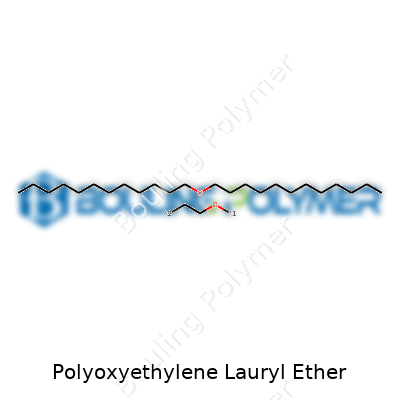
| Names | |
| Preferred IUPAC name | α-dodecyl-ω-hydroxypoly(oxyethylene) |
| Other names |
Laureth
Lauryl alcohol ethoxylate Polyethylene glycol lauryl ether Polyoxyethylene dodecyl ether Dodecyl polyoxyethylene ether Brij 35 |
| Pronunciation | /ˌpɒl.iˌɒk.siˈeθ.ɪ.liːn ˈlɔː.rɪl ˈiː.θər/ |
| Identifiers | |
| CAS Number | 9002-92-0 |
| 3D model (JSmol) | CCCCCCCCCCCCOCCOCCOCCOCCO |
| Beilstein Reference | 8193742 |
| ChEBI | CHEBI:77870 |
| ChEMBL | CHEMBL2107865 |
| ChemSpider | 21376 |
| DrugBank | DB11079 |
| EC Number | 500-021-6 |
| KEGG | D02409 |
| MeSH | Polyethylene Glycols |
| PubChem CID | 25421 |
| RTECS number | MD0875000 |
| UNII | 6DN79M1T5M |
| UN number | UN 3082 |
| Properties | |
| Chemical formula | C12H25(OCH2CH2)nOH |
| Molar mass | Variable (depends on ethoxylation degree, n) |
| Appearance | Colorless to light yellow liquid |
| Odor | Mild odor |
| Density | 1.0 g/cm³ |
| Solubility in water | Soluble |
| log P | 2.4 |
| Vapor pressure | < 0.01 hPa (20 °C) |
| Magnetic susceptibility (χ) | -8.0438e-4 cm^3/mol |
| Refractive index (nD) | 1.459 |
| Viscosity | 30 cP |
| Pharmacology | |
| ATC code | C05BB02 |
| Hazards | |
| Main hazards | H315: Causes skin irritation; H319: Causes serious eye irritation; H412: Harmful to aquatic life with long lasting effects |
| GHS labelling | GHS labelling: Signal word: Warning. Hazard statements: H319, H411. Precautionary statements: P264, P273, P280, P305+P351+P338, P337+P313, P391, P501. Pictograms: GHS07, GHS09. |
| Pictograms | GHS07, GHS09 |
| Signal word | Danger |
| Hazard statements | H315 Causes skin irritation; H319 Causes serious eye irritation; H411 Toxic to aquatic life with long lasting effects. |
| Precautionary statements | P264, P280, P305+P351+P338, P337+P313 |
| NFPA 704 (fire diamond) | 1 1 0 |
| Flash point | >100°C |
| Autoignition temperature | > 200 °C |
| Lethal dose or concentration | LD50 Oral Rat: 1600 mg/kg |
| LD50 (median dose) | LD50: 1600 mg/kg |
| NIOSH | No NIOSH REL established. |
| PEL (Permissible) | Not established |
| IDLH (Immediate danger) | Not established |
| Related compounds | |
| Related compounds |
Lauryl alcohol
Ethylene oxide Polyethylene glycol Sodium lauryl ether sulfate Lauromacrogol Laureth-3 Laureth-23 Brij 30 Brij 35 Nonoxynol-9 Polysorbate 20 Cetyl alcohol ethoxylate |


